The club has just returned from a fantastic week of Red Sea liveaboard diving in Egypt, with an unforgettable mix of historic shipwrecks, colourful coral reefs, night dives and some incredible marine life encounters.
Eight members of the club joined the trip, and for some, it was their first experience of liveaboard diving. Spending a week on a dive boat allowed us to visit multiple dive sites each day, explore some of Egypt’s most famous wrecks and experience what the Red Sea has to offer.
For other club members, this trip was also an opportunity to build experience ahead of future diving adventures. Some members are already planning another week in Egypt, this time heading towards Dahab.
With dolphins, turtles, night dives and two memorable dives on the famous HMS Thistlegorm, this was a week that will be remembered for a long time.
Our adventure began when we landed at Hurghada Airport at around 5 pm local time. After collecting our bags, we transferred to the port, which took approximately 20 minutes, where our home for the next week, the My Charlotte, was waiting for us.
Once on board, we received a warm welcome from Paul and Jane, who took us through the initial briefing. This covered room allocations, boat rules and the general arrangements for the week.
With everyone settled in, it was time to unpack, get familiar with the boat and relax after a long day of travelling.
Little did we know just how much we would see over the next six days!
Sunday morning began with the necessary coastguard checks before we could set sail and begin diving.
We also received a comprehensive briefing covering the planned dive sites, cylinder refills, boat safety and general procedures. It lasted around an hour and was a great introduction to how everything would work throughout the week.
Our first dive took place at Abu Ramada Island, a site also known as The Aquarium.
It was an ideal location to begin the trip. The relatively shallow water and colourful marine life gave everyone the opportunity to settle into the diving routine, check their weighting and familiarise themselves with the conditions.
There were fish everywhere, with plenty of colour and activity across the reef.
The dive also provided an opportunity for everyone to practise deploying a delayed surface marker buoy (DSMB). It was reassuring to see this included in the checks before the group moved on to the more challenging sites.
Our next stop was the famous Ghiannis D wreck, located in the Abu Nuhas reef area.
Abu Nuhas is well known for its collection of shipwrecks, making it one of the most popular destinations for wreck diving in the Red Sea. With several wrecks in the area, choosing the right site depends on conditions, currents and the experience of the group.
Paul recommended the Ghiannis D, as it offered a suitable dive with some shelter from the prevailing conditions.
The wreck lies at around 18 metres at its shallower sections, with deeper parts extending further down. It was a fascinating introduction to Red Sea wreck diving, with opportunities to explore around the ship and experience its underwater structure.
Visibility on this occasion wasn’t the best we would encounter in Egypt, but it was still a worthwhile dive and a great way to begin exploring the region’s historic wrecks.
After some surface interval time, we returned to the water for our first night dive of the trip.
For several members, this was their first experience of night diving, making it a particularly exciting opportunity.
The reef took on a completely different atmosphere once the sun had gone down. With torches illuminating the seabed, we could see marine life behaving differently from during the day, including fish hunting for their evening meal.
Spotting eyes reflecting in torchlight and watching the activity unfold around us made this a brilliant experience for those trying night diving for the first time.
It was a fantastic end to our first full day.
Monday began with another dive in the Abu Nuhas area, this time exploring a different section of the reef.
After the previous day’s wreck diving, it was good to spend more time appreciating the reef itself. As with many Red Sea dive sites, there was plenty of marine life to keep everyone occupied, with colourful fish and interesting features throughout the dive.
After breakfast, we headed towards Siyui Island for another reef dive.
The site offered another opportunity to enjoy the underwater scenery and observe the variety of marine life found throughout the northern Red Sea.
With several dives planned for the day, it was important to make the most of the surface intervals, enjoy the food on board and recharge before heading back into the water.
After lunch, we arrived at Gubal Island, where we explored a barge wreck lying at approximately 15 metres.
The wreck was covered in marine life, making it a fascinating little dive. There was plenty to explore, and the relatively shallow depth meant we could spend time looking around rather than rushing through the site.
One of the highlights was seeing several large moray eels in different locations around the wreck and reef. Triggerfish, clownfish and plenty of other marine life also made appearances.
It was a great example of how even smaller wrecks can become thriving underwater habitats.
With the island providing a sheltered place to spend the evening, we stayed in the area for another night dive.
Returning to a familiar site after dark was an interesting experience. Although we had already seen the barge during daylight, the underwater environment felt completely different at night.
More marine life was active, and there were plenty of fish hunting around the wreck and reef.
It was another excellent dive and a great opportunity for those new to night diving to build their confidence.
Tuesday morning started with a drift dive around the barge and along the point of Gubal Island.
The current carried us along the reef, allowing us to cover more ground while enjoying the underwater scenery.
Then, towards the end of the point, we spotted two shadows approaching in the distance.
At first glance, we thought they might be sharks. As they got closer, however, we realised they were dolphins.
And it wasn’t just one or two!
Around 10–15 dolphins appeared, creating one of the most memorable moments of the entire trip. The excitement within the group was incredible, and everyone was amazed by the encounter.
Seeing dolphins in the wild is always special, but encountering a group of this size while scuba diving was something else entirely.
For many of us, this was the highlight of the week. It was one of those moments that felt almost surreal and reminded us why we love exploring the underwater world.
Our original plan was to dive the famous HMS Thistlegorm. However, when we arrived at the site, there were already around ten other boats in the area.
Paul decided that we would have a better experience elsewhere rather than joining such a crowded dive site.
Instead, we headed to the SS Dunraven, another historic Red Sea shipwreck.
The wreck lies at depths approaching 30 metres and offers an interesting opportunity to explore a ship that has become part of the region’s underwater history.
Visibility was reasonable and noticeably better than we would typically expect in the UK, although it wasn’t quite the crystal-clear water many people associate with Egypt.
After exploring the wreck and passing through one of its swim-throughs, we continued along the reef before deploying our DSMBs and being collected by the support RIBs.
It was a great dive and another reminder of just how much wreck diving the Red Sea has to offer.
With the sea conditions remaining calm, we spent the evening at Beacon Rock and completed our fourth dive of the day.
Once again, the night brought a different perspective to the site. Fish were actively hunting, and the reef was full of life.
By this point, the group was settling into the rhythm of liveaboard diving: dive, eat, relax, prepare for the next dive, and repeat!
Wednesday was one of the most anticipated days of the trip, as we arrived at Ras Mohammed National Park and prepared to explore some of the Red Sea’s best-known dive sites.
Our first dive was at Jackfish Alley, a popular site within Ras Mohammed National Park.
Getting into the water here required a slightly different approach. With no suitable anchor point at the location, the skipper positioned the boat as close to the site as possible, allowing the divers to make a giant-stride entry from the back of the boat.
Once everyone was in the water, the boat moved away before returning to collect the group after the dive.
The site offered plenty to see, with reef features and marine life making it an enjoyable dive.
The highlight was spotting our first turtle of the trip! It was a fantastic encounter and a great start to the day.
Our next dive took us to Shark Reef and Yolanda Reef, another famous location within Ras Mohammed National Park.
Located around the corner from Jackfish Alley, this area is known for its impressive underwater scenery and diverse marine life.
The group enjoyed another excellent dive, with plenty to explore along the reef. We were also lucky enough to spot another turtle, giving us a second memorable wildlife encounter in the space of a few hours.
After two fantastic dives in Ras Mohammed, it was finally time to visit one of the most famous wrecks in the world: the HMS Thistlegorm.
The Thistlegorm was a British merchant ship carrying military supplies during the Second World War. In October 1941, while anchored in the Red Sea, it was attacked by German aircraft and sank.
Today, the wreck is one of Egypt’s most iconic scuba diving attractions, offering divers a remarkable glimpse into maritime and military history.
The ship is large enough that exploring it properly requires multiple dives. Our first visit focused on the bow section, where there was an incredible amount to take in.
From the ship’s structure to the surviving cargo and the various openings and swim-throughs, there was something interesting in almost every direction.
It was slightly overwhelming at times, simply because there was so much to see. Trying to take in the history, the size of the wreck and all the details around us was a real experience.
For anyone interested in wreck diving, the HMS Thistlegorm is a site that deserves a place high on the bucket list.
After a few hours’ surface interval, we returned for a night dive on the Thistlegorm.
By this point, most of the other boats had completed their night dives, meaning we were fortunate to have the wreck much quieter than earlier in the day.
Exploring such a historic wreck after dark was an incredible experience. Torchlight revealed different details, while the marine life brought another dimension to the dive.
The combination of history, the scale of the ship and the atmosphere of a night dive made this one of the standout experiences of the entire week.
It was difficult to take everything in during daylight, so returning at night provided another opportunity to appreciate just how special this wreck really is.
Thursday morning began with our second daytime dive on the HMS Thistlegorm.
Having explored the bow the previous day, it was now time to discover the stern, which lies at around 30 metres.
This section of the wreck offered plenty more to see, including the guns, engine area and other surviving military equipment.
Knowing the history of the ship made the experience even more powerful. Seeing the remains of a vessel that played a role in the Second World War, resting on the seabed, really brings history to life.
Once again, there was so much to take in that it would be easy to spend many more dives exploring the wreck.
Two dives had given us a fantastic introduction, but there was still plenty left to discover.
After leaving the Thistlegorm behind, we began making our way back towards Hurghada, stopping at Umm Uski for another reef dive.
Following several dives on historic wrecks, this was a more relaxed opportunity to enjoy the reef and the marine life.
As with many of the reef sites we visited during the week, there was plenty to see, making it a pleasant dive before our afternoon activities.
After lunch, we arrived at Shaab El Erg, a site also known as Dolphin House.
Two members of our group had unfortunately missed our earlier dolphin encounter at Gubal Island, so there was plenty of hope that we might see them again.
The dive itself was relatively shallow and relaxed, taking us around an island with a channel between the island and the mainland.
Unfortunately, the dolphins didn’t make an appearance during this dive. However, the reef was still enjoyable, and there was plenty of marine life to keep us occupied.
We weren’t giving up hope just yet!
We finished Thursday with another night dive at Shaab El Erg.
The site offered another opportunity to explore the reef after dark, with plenty of marine life visible under torchlight.
After a busy few days exploring some of Egypt’s most famous wrecks, it was a nice way to round off the day.
Friday morning started brilliantly, with sightings of what appeared to be a group of three dolphins.
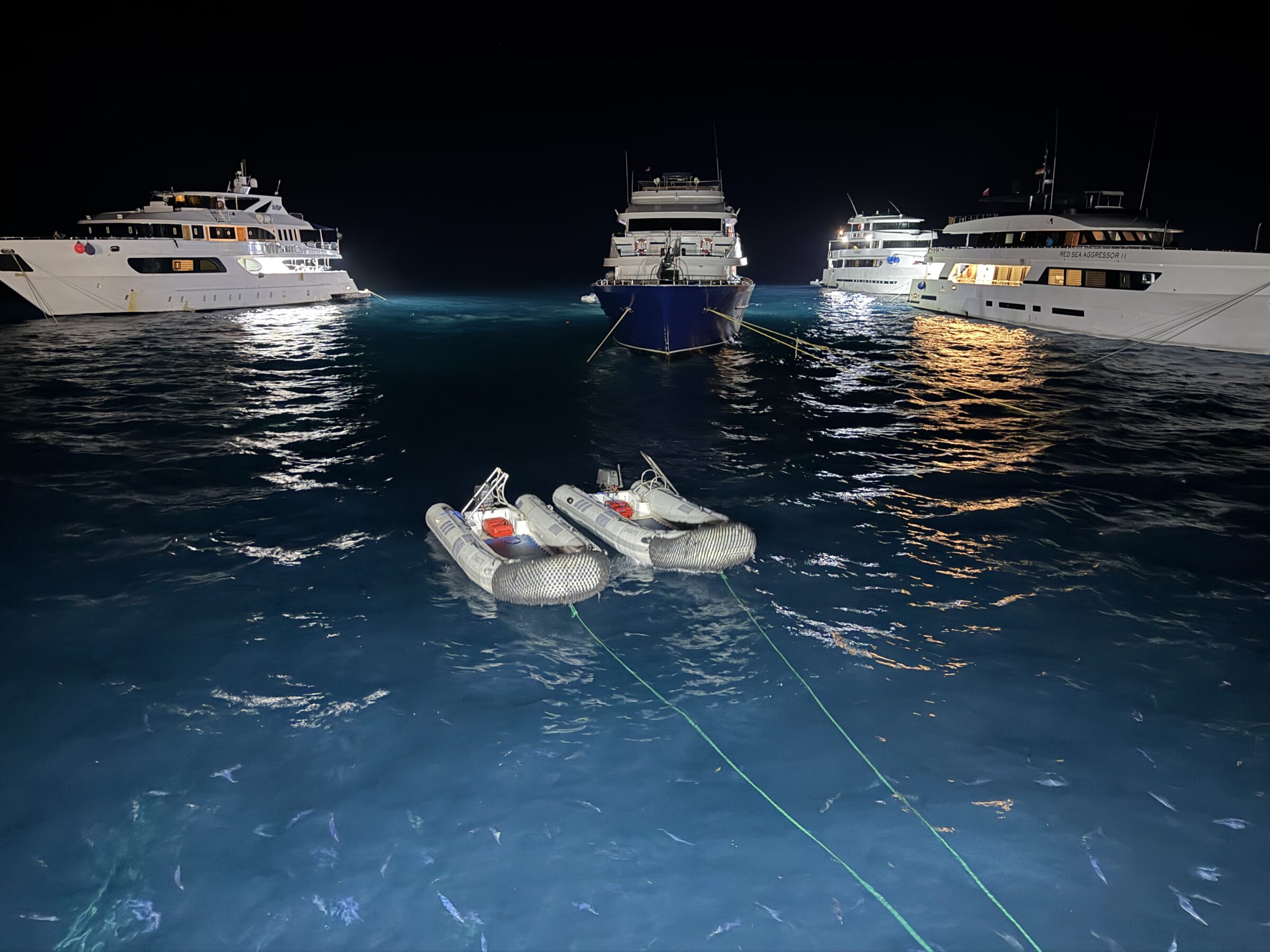
The team climbed aboard the Zodiac RIBs and headed towards the area just beyond where we had dived previously.
As we approached the boat again, we were lucky enough to see the three dolphins.
For the two members who had missed our first encounter earlier in the week, this was a particularly special moment.
It was a fantastic way to start our final full day of diving and a fitting reminder that you never quite know what you might encounter in the Red Sea.
Our final dive took us to a patrol boat wreck at around 30 metres near Umm Gammar.
This dive was a little different, as some members of the group were keen to explore the wreck, while others preferred to spend their time enjoying the surrounding reef.
The wreck featured two large engines and provided an interesting final opportunity to explore another piece of underwater history.
The current was particularly challenging, seeming to come from two different directions at times, which made the dive more demanding than expected.
However, there was still plenty of marine life to see. One of the highlights was spotting a particularly large pufferfish.
It was a memorable final dive and a great way to finish a week packed with different underwater experiences.
After our final dive, it was time to wash and prepare our equipment for the journey home.
Paul and the crew made the process straightforward, helping everyone get their kit cleaned, organised and ready to dry before packing.
Although the diving was over, we still had some time to enjoy the boat and reflect on everything we had experienced during the week.
Saturday morning marked the end of our time aboard the My Charlotte.
We were asked to check out by 10 am to allow the crew to prepare the boat for the next group of guests.
Paul was very accommodating, allowing us to remain on board and continue using the facilities while we waited for our transfer.
Our flight wasn’t scheduled until 8 pm, and it was eventually delayed by another hour, making for a long final day.
Anyone who has travelled through Hurghada Airport will know that there are numerous checks to go through, so the journey home required a little patience.
Despite the long day, we all headed home with fantastic memories of a brilliant week of diving in Egypt.
We booked the trip through Red Sea Liveaboard, an English-run operator that we would happily recommend to other divers considering a liveaboard holiday in Egypt.
Paul and Jane made us feel welcome from the moment we stepped on board. They were friendly, approachable and always available if anyone needed help.
Paul clearly had a wealth of diving knowledge and worked hard to ensure we got the most out of the trip. His decisions around dive site selection, particularly when conditions or crowds meant changing the plan, helped make the experience enjoyable for the whole group.
The crew were also fantastic. Although not everyone spoke fluent English, they were always on hand to help with kitting up, removing equipment after dives and anything else that made life on board easier.
Their support made a real difference, particularly for those experiencing liveaboard diving for the first time.
From the organisation and safety briefings to the day-to-day support, the whole experience was excellent.
If you’re an individual diver, a group of friends or a diving club looking to explore the Red Sea, we would recommend checking out Red Sea Liveaboard.
Absolutely!
This trip offered a fantastic mixture of experiences, from exploring the historic HMS Thistlegorm and Ghiannis D wrecks to enjoying colourful coral reefs, night diving and unforgettable encounters with dolphins and turtles.
For those new to liveaboard diving, it was a brilliant introduction to what can be achieved when you spend a week travelling between dive sites rather than returning to shore after every dive.
For the more experienced members, it was an opportunity to explore some of the Red Sea’s most iconic underwater locations and enjoy the incredible marine biodiversity that makes Egypt such a popular diving destination.
The dolphin encounter at Gubal Island, in particular, will stay with us for a long time. Seeing a group of around 10–15 dolphins underwater was an experience that is difficult to put into words.
A huge thank you to Paul, Jane and the entire crew of the My Charlotte for making the week so enjoyable.
We returned home tired, with plenty of kit to unpack, but full of memories and already thinking about the next adventure.
If you’re looking for a scuba diving holiday in Egypt, the Red Sea offers an incredible combination of world-class wreck diving, colourful reefs and unforgettable marine life. We can’t wait to return!